
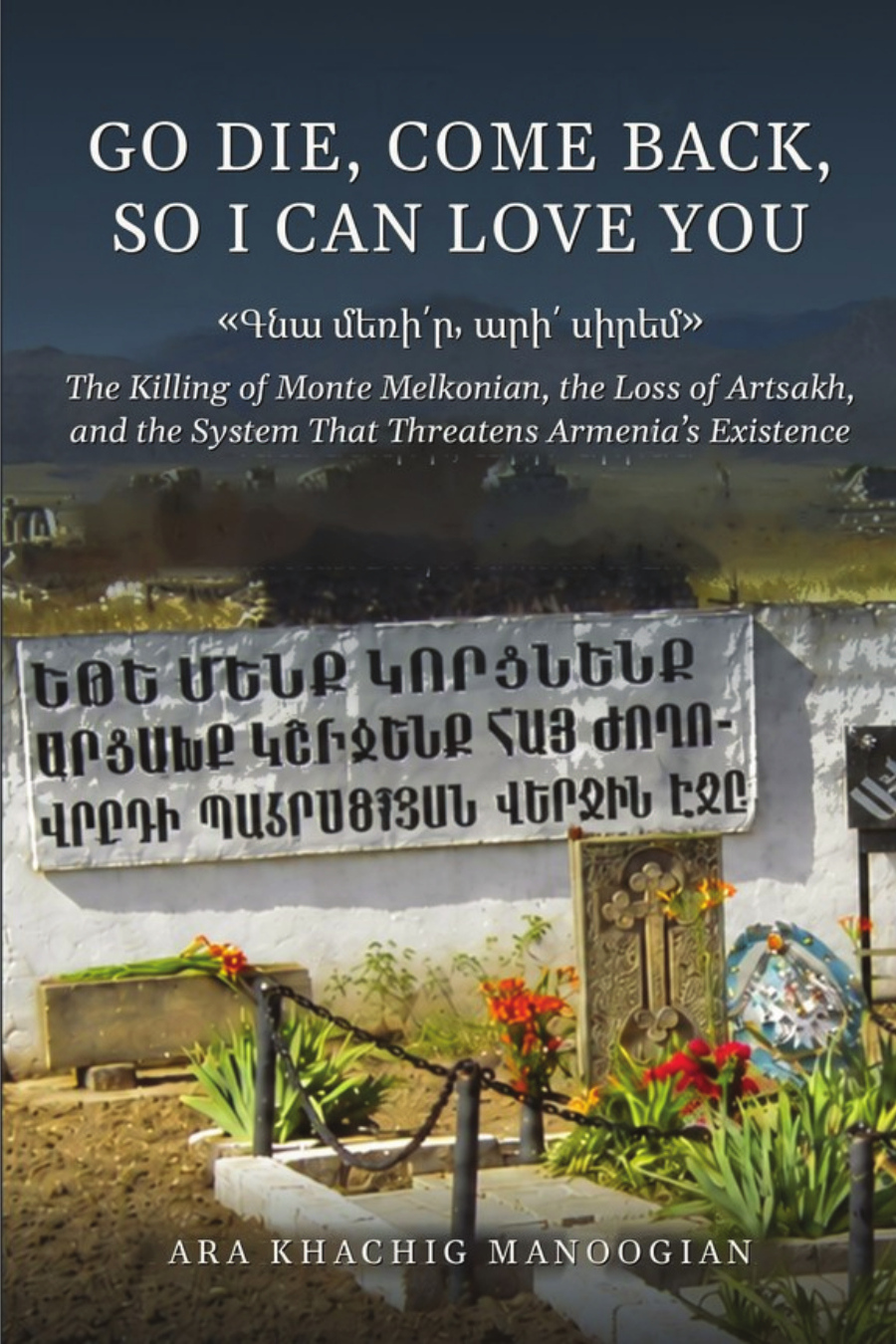
Global Peace International has concluded the twenty-eight-year investigation into the killing of Monte Melkonian, initiated by his father Charlie Melkonian on Thanksgiving Day 1998, and has published the full report and its findings as a book.
Global Peace International announced today the conclusion of a twenty-eight-year investigation into the killing of Monte Melkonian, and the publication of its full report as a book, Go Die, Come Back, So I Can Love You: The Killing of Monte Melkonian, the Loss of Artsakh, and the System That Threatens Armenia’s Existence, by Ara Khachig Manoogian.
The investigation was not the author’s. It was initiated by Monte Melkonian’s father.
Thanksgiving Day, 1998
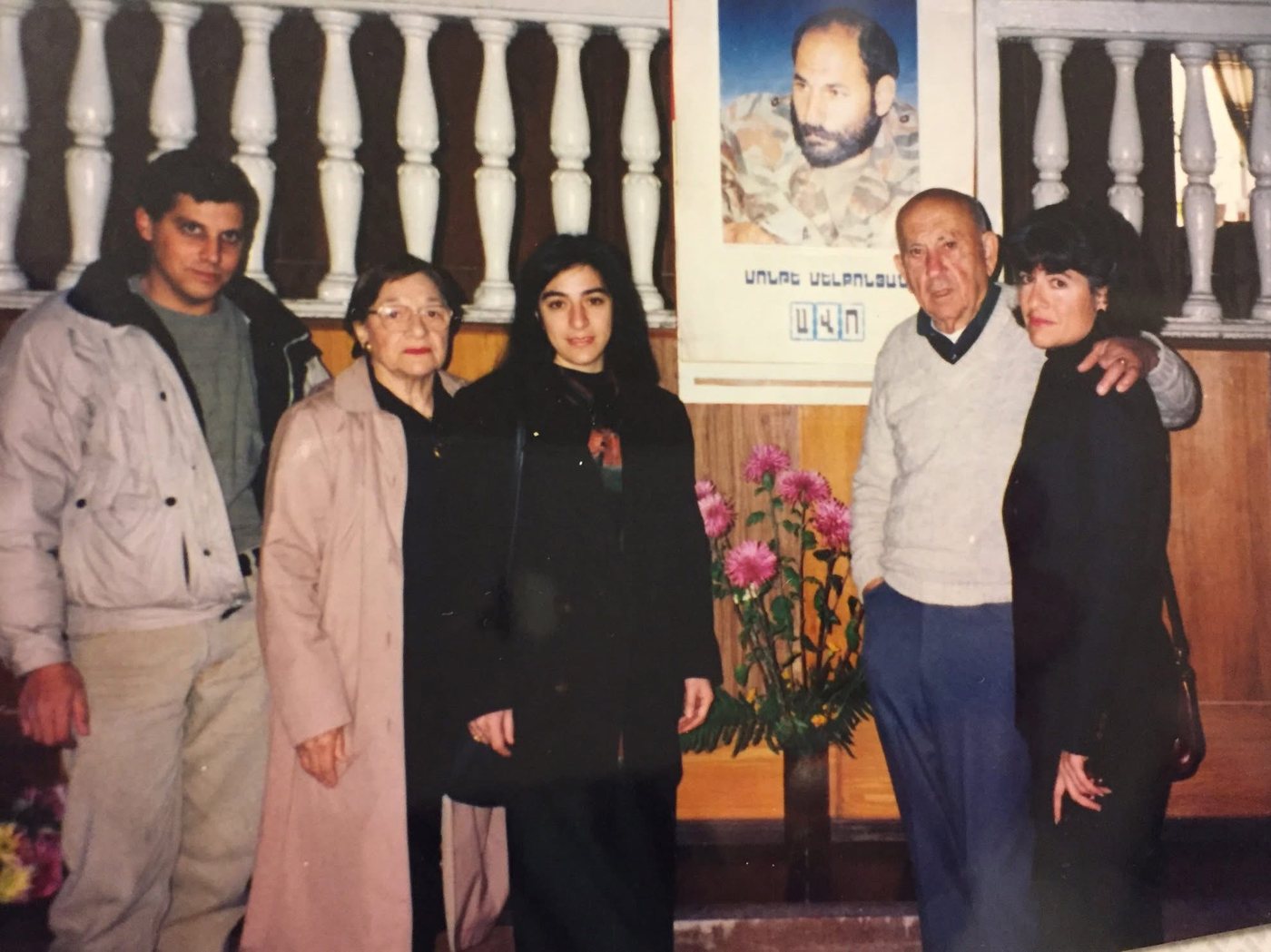
On November 26, 1998, American Thanksgiving Day, Monte Melkonian’s family went to the place where he was killed. His father Charlie was eighty, and everyone understood it was the last time he would stand in Armenia. At the end of that afternoon, walking to the cars, he said one sentence to the only person beside him, and he said it to nobody else on that trip. It concerned the man who had just finished telling him how his son had died.
The man he said it to was Ara Khachig Manoogian, then thirty-three, a licensed locksmith with a shop in Burbank who had moved to Martuni earlier that year. He answered that if Charlie was right, he would get to the bottom of it. The exchange took about four seconds. Charlie Melkonian never asked anyone to investigate, and he died without hearing a single thing it turned up.
What the report rests on
Monte Melkonian was killed on June 12, 1993, on a road outside the village of Merzuli. He was thirty-five and commanded the Martuni defense region. More than two hundred Armenian soldiers were in and around that village that morning. Only one of them was ever asked what happened. No file was opened. No one has ever been tried.
The report is built on the men who were on that ground that morning, on documents, and on a four-page account written in 1998, taken out of a safe a decade later, and edited in its author’s own hand. For the first time it sets the Azerbaijani account of that morning beside the Armenian one, taken from veterans who were firing from the other side. The evidence is presented in the order it was found, so that the reader reaches a verdict before the family’s words are heard.
The author did not fly in to conduct interviews. He moved to the town Monte Melkonian had commanded and stayed. He married there, stood as godfather to more than a hundred of its children, and buried its people. Almost all of the material was gathered in that place, from men who had been told for thirty years not to speak.
The finding
The investigation did not find a murderer. It found a system that protects the unfit, punishes the man who reports them, and rewrites the record afterward so that nobody has to answer for anything. Monte Melkonian was dismantling that system when he was killed, and the central finding of the report is that the system is still in place. In 2020 it lost Artsakh. Since then the Republic of Armenia has lost territory of its own, and what is being asked for now is the south, where Armenia touches Iran.
Monte Melkonian also left a warning, on camera, in the last months of his life. The fedayi phase was over, a real army had to be built, and recent success was not final success. If we were weak we could lose. That army was not built.
He never asked me for anything. He did not say find out or promise me. He said his one sentence and waited. I answered him. I said that if he was right, I would get to the bottom of it. That took about four seconds, on gravel, between a flight of steel stairs and a car, and everything in this book came out of it.
Availability
Go Die, Come Back, So I Can Love You is published by Global Peace International of Burbank, California, and is available in paperback and as an eBook through the Global Peace International bookstore. ISBN 978-1-950801-07-7.
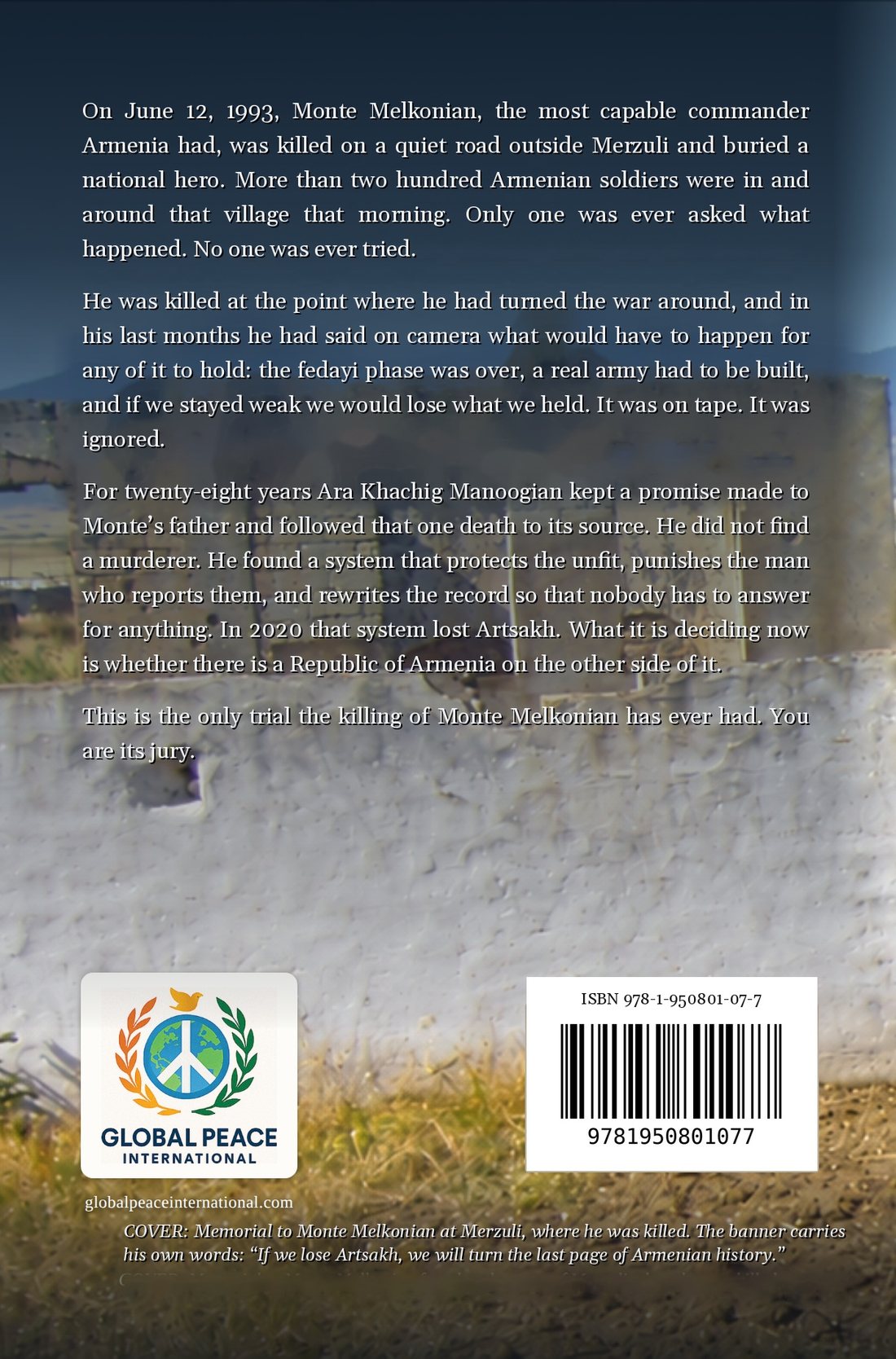
It appears alongside three companion publications: Artsakh Is Armenia: A Legal Examination of Armenia’s Reunification Record; The Armenian Civil Contract: Rights, Representation, and Consent Between the Republic and the Nation; and TRIPP and the Security of the Republic of Armenia: A National-Security Risk Assessment.
This is, to this day, the only trial the killing of Monte Melkonian has ever received.
Join the Conversation